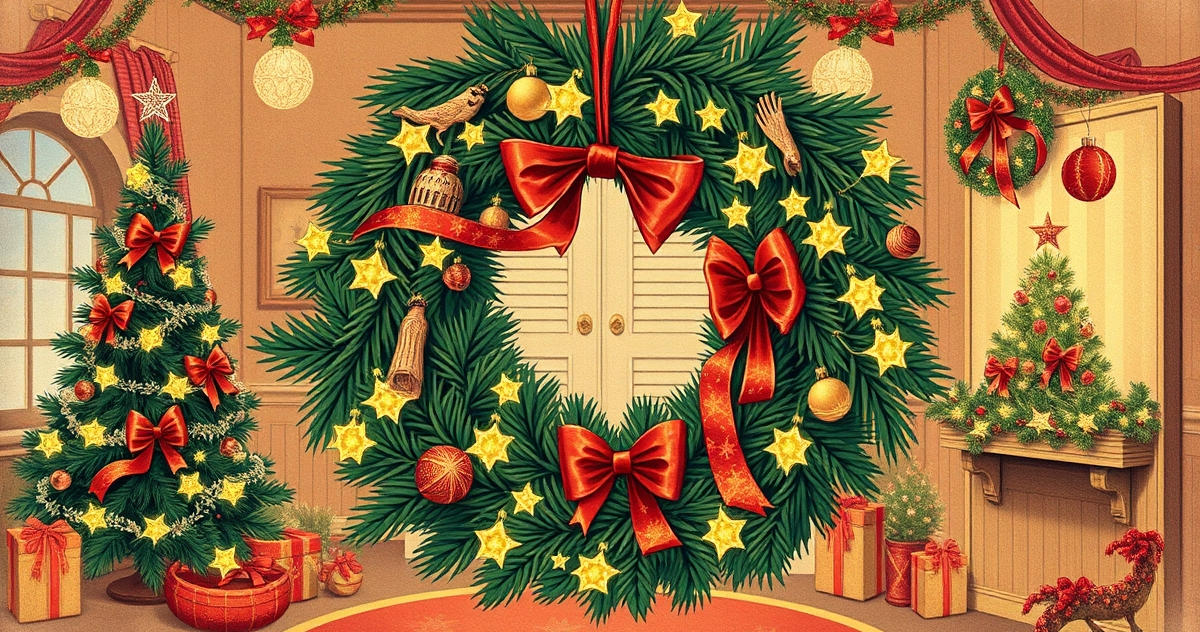
Picture a Roman soldier returning home victorious, crowned with a circular arrangement of laurel leaves. Fast-forward two millennia, and that same circular symbol now graces millions of front doors across Pennsylvania, often glowing with warm white LED mini lights and adorned with red velvet bows. The history of Christmas wreaths spans empires, crosses continents, and bridges ancient pagan rituals with modern holiday technology.
Ancient Roots: Roman Circular Crowns and Pagan Traditions
The circular wreath predates Christianity by centuries. Ancient Romans crafted victory wreaths from laurel, oak, and olive branches, creating crowns for triumphant generals and athletes. These circular decorations symbolized eternal life, victory, and divine favor — concepts that would later seamlessly blend with Christian symbolism.
Celtic and Germanic tribes also embraced circular decorations during winter solstice celebrations. They wove evergreen branches into circles, believing the unbroken loop represented the eternal cycle of seasons and the promise that spring would return. These hardy evergreens — pine, fir, and holly — survived harsh winters, making them powerful symbols of enduring life.
The circular shape itself held deep meaning across cultures. With no beginning or end, the circle represented infinity, wholeness, and the divine. When early Christians adopted these symbols, they transformed pagan winter rituals into celebrations of eternal life through Christ.
Medieval Christian Adaptation: The Advent Wreath
By the Middle Ages, Christian communities had transformed the pagan winter circle into the Advent wreath. German Christians created wreaths with four candles — three purple and one pink — to mark the weeks leading to Christmas. Each Sunday, they lit another candle, building anticipation for Christ's birth.
These early Advent wreaths were practical as well as symbolic. In an era before electric lighting, the candles provided precious light during the darkest weeks of winter. Families gathered around their wreaths each evening, the flickering flames creating an intimate atmosphere for prayer and reflection.
Monasteries and churches began crafting elaborate wreaths for their sanctuaries. Monks wove evergreen branches with holly berries, rosemary, and ivy, each plant carrying specific Christian symbolism. The pointed holly leaves represented Christ's crown of thorns, while the red berries symbolized his shed blood.
Victorian Era: Christmas Wreaths Enter the Home
The Victorian era transformed Christmas from a primarily religious observance into an elaborate domestic celebration. Queen Victoria and Prince Albert's German Christmas traditions — including wreaths — spread throughout Britain and America during the 1840s and 1850s.
Victorian wreaths were masterpieces of craftsmanship. Families spent weeks gathering materials: boxwood from gardens, holly from forests, pinecones from walks in the woods. They adorned their creations with silk ribbons, wax fruits, small toys, and candles. These wreaths weren't just decorations — they were family art projects that brought everyone together.
The Victorians moved wreaths from churches to front doors, making them the first glimpse visitors had of holiday celebration. Door wreaths became status symbols, with wealthy families commissioning elaborate designs featuring exotic materials like peacock feathers, imported fruits, and expensive ribbons.
This era also saw the rise of window wreaths. Victorian homes featured multiple wreaths throughout — one for each window facing the street, creating a coordinated holiday display that announced the family's Christmas spirit to the entire neighborhood.
20th Century Innovation: From Candles to Electric Lights
The early 1900s brought electric lighting to wreaths, though the transition was gradual. Thomas Edison's incandescent bulbs were expensive and unreliable, so many families continued using candles well into the 1920s.
World War II created unexpected wreath innovations. With metal and glass in short supply, crafters turned to alternative materials. Paper wreaths, felt decorations, and even wreaths made from recycled materials became common. These wartime adaptations proved that the wreath's symbolic power transcended materials — the circle itself carried the meaning.
The post-war boom years saw mass production of artificial wreaths. Department stores began selling pre-made wreaths with built-in electric lights, making elegant holiday decorating accessible to middle-class families. By the 1960s, red and green color schemes dominated, establishing the classic Christmas palette we recognize today.
Modern LED Revolution: Smart Wreaths for the Digital Age
Today's wreaths would astound Victorian decorators. Modern LED mini lights consume 90% less energy than incandescent bulbs while lasting 25 times longer. These tiny lights can be programmed to create complex patterns, fade effects, and even sync with music.
Professional holiday decorators now craft wreaths with sophisticated lighting systems. Warm white LED mini lights create elegant residential displays that complement any architectural style. Some installations feature color-changing capabilities, allowing homeowners to shift from traditional red and green for Christmas to warm white for New Year's celebrations.
Smart home integration has reached wreaths too. Homeowners can control their wreath lighting through smartphone apps, setting timers, adjusting brightness, and even coordinating with their entire residential holiday lighting display. Motion sensors can trigger wreaths to brighten when visitors approach, creating a welcoming entrance.
Commercial wreaths have become architectural features. Shopping centers install 20-foot wreaths with thousands of LED lights, creating focal points visible from highways. These massive installations often incorporate professional mini light techniques scaled up to commercial proportions.
Pennsylvania Wreath Traditions Today
Pennsylvania's rich German heritage makes it a natural hub for wreath traditions. From Lancaster County's Amish communities creating simple, elegant designs to Philadelphia's elaborate commercial displays, the Keystone State showcases wreath diversity.
Many Pennsylvania families combine historical elements with modern technology. A typical residential installation might feature a traditional evergreen wreath base adorned with red velvet bows and illuminated by warm white LED mini lights. This combination honors Victorian craftsmanship while embracing 21st-century efficiency.
Professional installers now offer custom wreath design services, working with families to create unique displays that reflect their personal style. Whether it's incorporating family heirloom ornaments or designing wreaths that complement specific architectural features, modern wreath installation has become a specialized craft.
Window wreaths remain popular in Pennsylvania's historic neighborhoods, where colonial and Victorian homes provide perfect backdrops for multiple coordinated displays. Professional installers often recommend different sizes for various windows, creating visual harmony across an entire façade.
Frequently Asked Questions
When did Christmas wreaths first include electric lights?
Electric lights began appearing on Christmas wreaths in the early 1900s, shortly after Edison's incandescent bulbs became commercially available. However, widespread adoption didn't occur until the 1920s and 1930s, when electric lighting became more reliable and affordable for average families.
What's the difference between traditional incandescent and modern LED wreath lighting?
LED mini lights use 90% less energy than incandescent bulbs, last 25 times longer, and generate minimal heat. This makes them safer for evergreen wreaths and allows for more complex lighting designs. LEDs also offer consistent color temperature and can be programmed for various effects, from steady glow to gentle fading patterns.
Why did Victorian families choose evergreen materials for their Christmas wreaths?
Evergreens symbolized eternal life and hope during winter's darkest months. Victorian families appreciated both the symbolic meaning and practical benefits — evergreen branches retained their beauty throughout the holiday season, unlike deciduous materials that would wilt or brown quickly indoors.
How do modern smart wreaths integrate with home automation systems?
Modern smart wreaths can connect to Wi-Fi networks, allowing control through smartphone apps or integration with systems like Amazon Alexa or Google Home. Homeowners can set automatic timers, adjust brightness, change colors (on color-capable models), and coordinate wreath lighting with other holiday decorations throughout their property.
What makes Pennsylvania particularly significant in American wreath traditions?
Pennsylvania's strong German immigrant heritage brought many European Christmas traditions, including elaborate wreath-making techniques, to America. The state's colonial and Victorian architecture also provides ideal settings for traditional wreath displays, helping preserve historical decorating practices while incorporating modern innovations like LED lighting systems.
From Roman victory crowns to LED-illuminated masterpieces, Christmas wreaths represent one of humanity's most enduring decorative traditions. Today's Pennsylvania homeowners can honor this rich history while enjoying modern conveniences — energy-efficient LED lighting, weather-resistant materials, and professional installation services that ensure perfect placement and reliable operation throughout the holiday season. Professional holiday decorators combine centuries of tradition with cutting-edge technology, creating wreaths that would make both Roman generals and Victorian families proud. To explore custom wreath options for your Pennsylvania home, visit our project gallery for inspiration from past installations.