
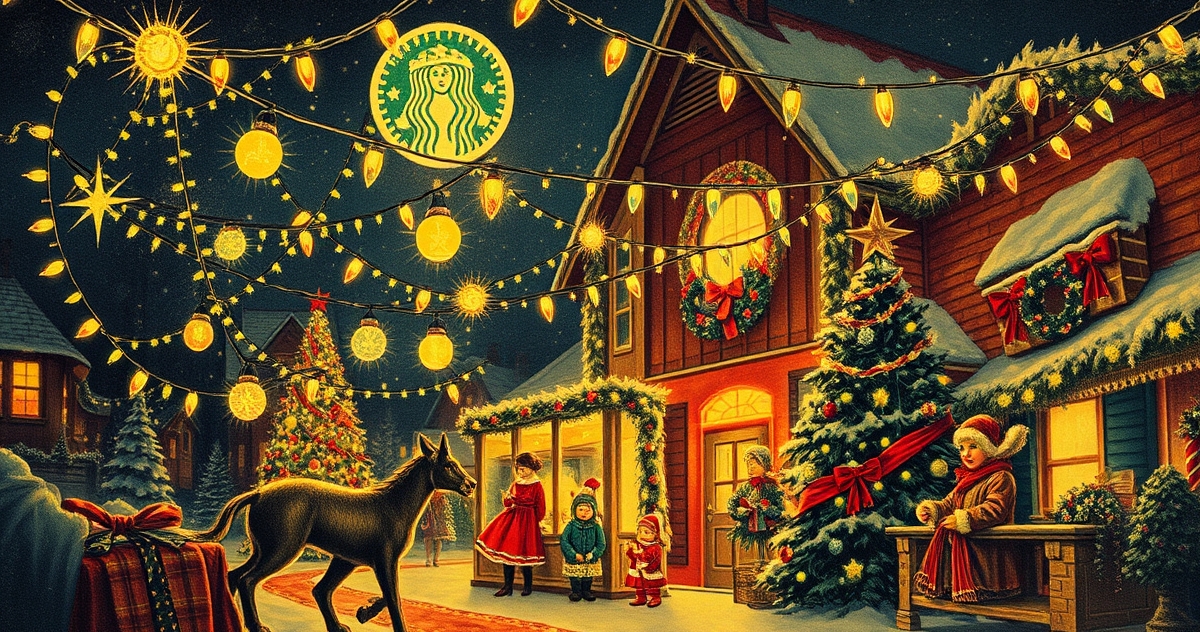
Picture Thomas Edison's Menlo Park laboratory on a cold December evening in 1880. Red, white, and blue electric bulbs — the first of their kind — illuminated the darkness outside his workshop, creating what would become the world's first electric Christmas light display. That magical moment sparked a revolution that would transform how we celebrate the holidays, evolving from Edison's handcrafted bulbs to today's brilliant LED C9 bulbs gracing Pennsylvania rooflines.
The journey from Edison's experimental lights to the warm white and multicolor mini lights adorning our homes today tells the fascinating story of American innovation, manufacturing ingenuity, and our enduring love affair with holiday lighting.
Thomas Edison's Revolutionary Christmas Display
On December 22, 1880, Thomas Edison strung red, white, and blue incandescent bulbs around his Menlo Park laboratory in New Jersey — just a few hundred miles from where Holiday Lights Decor Pennsylvania now serves customers across the Keystone State. This wasn't just a holiday decoration; it was a bold marketing demonstration of electric power's potential.
Edison's display featured 80 hand-blown glass bulbs, each one individually wired and carefully tested. The spectacle drew crowds from New York City and beyond, with people taking special trains to witness this "miracle of electric illumination." Newspaper reporters called it "a fairy tale scene," describing how the electric lights created "a most weird and beautiful sight."
What made Edison's display revolutionary wasn't just the technology — it was the safety. For centuries, families had decorated Christmas trees with wax candles held by small metal clips. These open flames caused countless house fires, including one that nearly burned down the White House in 1856. Edison's electric lights offered the same magical glow without the deadly risk.
The original bulbs were enormous compared to today's standards — larger than modern C9 bulbs and far less efficient. Each bulb consumed about 16 watts and lasted only 40 hours. But they represented a quantum leap in both safety and spectacle, setting the stage for the holiday lighting industry we know today.
From Luxury to Mass Production: The Early Electric Christmas Era
Following Edison's demonstration, electric Christmas lights remained a luxury for nearly two decades. The first commercially available Christmas light sets appeared in 1890, hand-assembled by Edison General Electric Company. A single string of 80 lights cost $80 — equivalent to about $2,500 today — making them affordable only to wealthy families.
President Benjamin Harrison became the first president to install electric Christmas lights in the White House in 1891, hiring electricians to wire the tree because family members feared electrocution. This presidential endorsement helped legitimize electric Christmas lighting among affluent Americans.
The breakthrough came in 1903 when the Ever-Ready Company introduced the first mass-produced Christmas light strings. These pre-wired sets sold for $12 (about $400 today), making them accessible to middle-class families. The lights were still large by today's standards — similar to our C9 bulbs but with carbon filaments that produced a warm, golden glow.
Department stores quickly recognized the marketing potential. Lord & Taylor in New York created elaborate electric light displays, while Macy's began its famous Christmas window decorations using hundreds of colorful bulbs. These commercial displays helped normalize electric Christmas lighting and inspired homeowners across Pennsylvania and beyond to create their own illuminated celebrations.
World War I temporarily halted the Christmas light boom as copper and other materials were diverted to the war effort. But the 1920s brought explosive growth, with companies like NOMA Electric Corporation leading mass production efforts. By 1930, electric Christmas lights had become an expected part of American holiday celebrations.
The Evolution of Bulb Technology and Design
The 1920s and 1930s saw remarkable innovation in Christmas light design. Manufacturers introduced the first mini lights — smaller bulbs that could wrap around tree branches and create more detailed displays. These early mini lights were the ancestors of today's versatile mini light applications that we use for everything from bush lighting to intricate architectural details.
Color technology advanced rapidly during this period. Early lights were primarily clear or painted glass, but manufacturers began experimenting with colored glass and new filament types. The introduction of tungsten filaments in the 1910s made bulbs brighter and longer-lasting, while colored glass created the multicolor palettes that became synonymous with Christmas celebration.
The iconic C9 bulb design emerged in the 1940s, featuring the distinctive strawberry shape that remains popular today. These larger bulbs were perfect for outlining rooflines and creating bold architectural statements — exactly what we see in our Pennsylvania installation gallery today. C9 bulbs offered the perfect balance of visibility and elegance, making them ideal for both residential and commercial applications.
Safety improvements accompanied design innovation. Manufacturers introduced parallel wiring, which prevented entire strings from going dark when one bulb failed. They also developed safer electrical connections and began using flame-retardant materials in sockets and wiring. These improvements made electric Christmas lights increasingly reliable and safe for home use.
The post-World War II economic boom brought Christmas lighting to suburban America in a big way. New manufacturing techniques reduced costs while improving quality, making elaborate light displays accessible to average homeowners. This period established many of the design principles and installation techniques that professional services like ours still use when creating residential holiday displays across Pennsylvania.
The LED Revolution: Modern Christmas Lighting Technology
The most significant advancement in Christmas lighting history occurred in the late 1990s and early 2000s with the introduction of LED (Light Emitting Diode) technology. This wasn't just an incremental improvement — it was a complete transformation of holiday lighting capabilities and economics.
LED Christmas lights consume up to 90% less energy than traditional incandescent bulbs while lasting 25 times longer. A string of LED C9 bulbs that would have cost $30 in electricity per season with incandescent technology now costs less than $3. This dramatic efficiency improvement made elaborate displays affordable for homeowners and businesses alike, as we detail in our analysis of LED energy savings for Pennsylvania families.
Beyond efficiency, LEDs offered unprecedented design flexibility. Unlike incandescent bulbs that produce white light filtered through colored glass, LEDs can generate pure colors directly from the diode. This technology enables vibrant multicolor displays with crisp, saturated hues that maintain their intensity throughout the season.
LED durability revolutionized professional installation practices. Traditional incandescent bulbs were fragile and required frequent replacement during Pennsylvania's harsh winter weather. LEDs withstand temperature extremes, moisture, and physical impact far better than their predecessors, making them ideal for challenging installation environments like steep rooflines and exposed commercial facades.
Smart LED technology represents the cutting edge of Christmas lighting. Modern LED systems can be programmed for complex color sequences, synchronized to music, and controlled remotely through smartphone apps. These capabilities have elevated holiday lighting from simple decoration to dynamic art installations that respond to environmental conditions and special occasions.
The environmental impact of LED adoption has been substantial. A typical household Christmas display that consumed 2,000 watts with incandescent bulbs now uses just 200 watts with LEDs — a reduction equivalent to removing several cars from the road during the holiday season. This efficiency gain has made large-scale displays environmentally responsible for the first time in Christmas lighting history.
Christmas Lighting in Pennsylvania: Local Traditions and Modern Applications
Pennsylvania's rich history with Christmas traditions makes it a perfect backdrop for understanding how electric lighting evolved alongside regional holiday celebrations. The state's German immigrant communities brought strong Christmas tree traditions in the 1800s, creating ready adoption for Edison's electric innovations when they became available.
Pennsylvania's colonial architecture presents unique opportunities and challenges for holiday lighting. The distinctive rooflines, shuttered windows, and stone facades of colonial homes require specialized techniques that honor historical aesthetics while incorporating modern LED technology. Professional installers have developed methods for highlighting architectural details without overwhelming the classic proportions that make these homes beautiful.
The state's variable weather conditions — from Lake Erie snow belts to southeastern rain — have driven innovations in lighting installation and protection. Pennsylvania installers were among the first to adopt commercial-grade clipping systems and weatherproof connections that ensure displays remain beautiful throughout winter's worst conditions.
Commercial and municipal applications have flourished across Pennsylvania's cities and towns. From Philadelphia's elaborate City Hall displays to small-town Main Street decorations, LED technology has made large-scale installations feasible for communities of all sizes. These public displays create economic benefits by attracting visitors and supporting local businesses during the crucial holiday shopping season.
The Science Behind Modern Christmas Light Colors
Understanding color technology helps explain why modern LED lights look so different from their incandescent predecessors. Traditional bulbs produced light by heating tungsten filaments to about 2,700K, creating the characteristic warm white glow with yellowish undertones. This warm temperature made colored glass filters appear muted and limited color options.
LED technology generates light through semiconductor processes that can produce specific wavelengths directly. Pure red LEDs emit light at 660 nanometers, while blue LEDs produce 470-nanometer light. This precise control creates the vibrant multicolor displays possible with modern Christmas lighting systems.
Warm white LEDs (2700K-3000K) closely replicate the cozy feeling of traditional incandescent lights while offering all the efficiency and durability advantages of LED technology. These are perfect for elegant residential applications where homeowners want classic Christmas ambiance with modern reliability.
Color mixing capabilities in modern LED systems allow for virtually unlimited palette options. Advanced controllers can blend primary colors to create custom hues, enable smooth color transitions, and synchronize complex sequences across multiple lighting zones. This technology has transformed Christmas lighting from static decoration to dynamic art medium.
Professional Installation: Bringing History to Modern Homes
The evolution from Edison's hand-wired display to today's sophisticated LED systems has created a need for professional installation expertise. Modern Christmas lighting involves electrical knowledge, architectural understanding, weather protection strategies, and aesthetic design principles that require specialized training and experience.
Professional installers understand how different LED technologies interact with various architectural styles. Colonial homes benefit from warm white C9 roofline lighting that complements traditional aesthetics, while modern homes can showcase bold multicolor displays that emphasize contemporary design elements. This knowledge ensures that lighting enhances rather than overwhelms a home's character.
Safety considerations have evolved alongside technology improvements. While LED lights are inherently safer than incandescent bulbs, proper installation requires understanding electrical loads, weather protection, and structural mounting techniques. Professional installers carry insurance and use commercial-grade equipment that ensures displays remain safe and beautiful throughout the season.
The integration of smart controls and programmable features adds complexity that benefits from professional design and installation. Modern LED systems can incorporate timers, motion sensors, and smartphone controls that require network configuration and electrical integration beyond typical homeowner capabilities.
Frequently Asked Questions
Who invented the first electric Christmas lights?
Thomas Edison created the first electric Christmas light display in December 1880 at his Menlo Park laboratory in New Jersey. His display featured 80 hand-blown red, white, and blue incandescent bulbs that demonstrated the safety and beauty of electric lighting compared to dangerous candle-lit trees.
When did Christmas lights become affordable for average families?
Electric Christmas lights became accessible to middle-class families around 1903 when the Ever-Ready Company introduced mass-produced light strings for $12 (about $400 today). Prior to this, hand-assembled sets cost $80 (equivalent to $2,500 today) and were only available to wealthy households.
What are the main advantages of LED Christmas lights over incandescent bulbs?
LED Christmas lights consume up to 90% less energy than incandescent bulbs, last 25 times longer, produce less heat, offer more vibrant colors, and withstand weather extremes better. A typical holiday display that cost $30 in electricity with incandescent lights now costs less than $3 with LEDs, while providing superior brightness and reliability.
Why do some people prefer warm white Christmas lights over multicolor?
Warm white LED lights (2700K-3000K) closely replicate the cozy, traditional feel of incandescent bulbs while offering modern LED efficiency and durability. Many homeowners choose warm white for elegant, sophisticated displays that complement classic architectural styles, particularly on Pennsylvania's historic colonial homes.
How has LED technology changed professional Christmas light installation?
LED technology has revolutionized professional installation by offering superior durability in harsh weather, reduced electrical requirements for elaborate displays, precise color control, smart programming capabilities, and significantly lower maintenance needs. These improvements allow installers to create more complex and reliable displays while reducing long-term costs for customers.
From Edison's pioneering 80-bulb display to today's smart LED systems, the history of electric Christmas lights reflects American innovation and our enduring love for holiday celebration. Whether you're drawn to the classic elegance of warm white C9 bulbs or the festive appeal of multicolor mini lights, professional installation ensures your display honors this rich tradition while incorporating the latest technology and safety standards. Contact Holiday Lights Decor Pennsylvania at (908) 336-2625 to bring this magical history to your home with expertly designed and installed holiday lighting that transforms your property into a winter wonderland.