
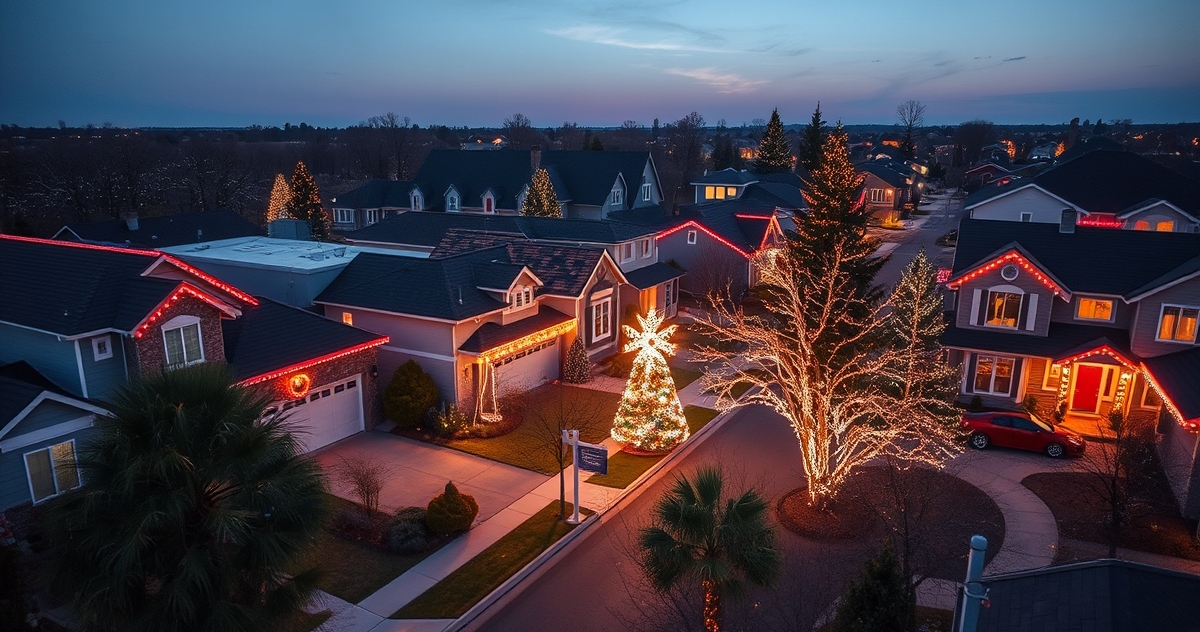
The bare maple in your front yard transforms into a glowing winter masterpiece when wrapped with thousands of twinkling mini lights. Professional tree wrapping with mini lights requires more than simply tossing lights around branches – it demands strategic planning, precise technique, and weatherproofing expertise that separates amateur attempts from showstopping displays.
Understanding Tree Wrapping Fundamentals
Professional tree wrapping with mini lights creates stunning visual impact through methodical application. Unlike random light placement, expert installation follows specific patterns that enhance the tree's natural architecture while ensuring even light distribution and long-lasting performance.
Cool white mini lights offer the most elegant approach for mature trees, creating sophisticated winter scenes that complement both traditional and contemporary homes. The crisp, clean illumination highlights branch structure without overwhelming the landscape design. Multicolor mini lights work beautifully on younger trees or family-focused displays, bringing festive energy to front yards and creating magical backdrops for holiday photos.
The key to professional results lies in understanding your tree's unique characteristics. Deciduous trees reveal their complete branch structure in winter, making every wrapping decision visible. Evergreens present different challenges, requiring techniques that work with dense foliage rather than against it.
The Branch Selection Method
Professional installers don't wrap every branch – they select strategically to maximize visual impact while minimizing installation time and light requirements. The branch selection method focuses on three categories: primary branches (main limbs extending from the trunk), secondary branches (major divisions from primary branches), and tertiary branches (smaller offshoots worth highlighting).
Start by identifying the tree's strongest visual lines. Primary branches create the foundation of your lighting design and should always receive full wrapping treatment. These main limbs establish the tree's shape and provide the most dramatic illumination when properly wrapped with mini lights.
Secondary branches require selective attention. Wrap branches that extend the tree's natural silhouette or fill visual gaps in the canopy. Skip secondary branches that crowd the design or create unnecessary complexity. This selective approach prevents the over-lit appearance that marks amateur installations.
Tertiary branches offer opportunities for fine detail work. In commercial applications or high-end residential installations, wrapping select tertiary branches adds depth and richness to the overall effect. However, budget-conscious projects can skip these smaller branches without significant visual impact.
Light Count Calculations for Professional Results
Accurate light calculations separate professional tree wrapping from guesswork. The standard formula requires 100 mini lights per vertical foot of tree height for full-coverage wrapping. A 15-foot maple needs approximately 1,500 mini lights for complete professional coverage.
However, tree species and branching patterns affect these calculations significantly. Dense trees like oaks or maples may require up to 150 lights per foot for full saturation, while sparse trees like honey locusts achieve excellent results with 75-80 lights per foot. Evergreens typically fall in the middle range, requiring 100-125 lights per foot depending on needle density.
Professional installers also consider viewing angles when calculating light requirements. Trees visible from multiple directions need more comprehensive coverage than trees viewed primarily from one side. Front yard focal trees receive full 360-degree treatment, while side yard trees may only need 180-degree coverage facing the street and house.
Branch diameter influences wrapping density as well. Wrap thick primary branches with lights spaced 2-3 inches apart for maximum impact. Secondary branches can accommodate 4-6 inch spacing, while tertiary branches may only need lights at key points rather than continuous wrapping.
Professional Installation Techniques
Professional tree wrapping begins from the bottom and works systematically upward. Start each primary branch at its junction with the trunk, securing the first connection point with a twist tie or professional clip. This anchor point prevents the entire string from sliding down the branch under its own weight.
The spiral wrapping technique creates the most professional appearance. Wind mini lights around each branch in tight spirals, maintaining consistent spacing throughout the length. Professional installers keep constant tension on the light string to prevent sagging while avoiding excessive tightness that might damage wires or connections.
Branch intersections require special attention. When moving from one branch to another, create smooth transitions that hide wire runs and maintain the illusion of continuous light flow. Professional techniques include tucking transition wires behind larger branches or using the natural shadows created by branch overlaps.
Working with power limitations shapes professional installation strategy. Most residential circuits handle 4-6 100-light strings of mini LEDs safely. Plan your wrapping pattern to minimize extension cord runs and ensure each circuit stays within safe amperage limits. Custom design services often include electrical load calculations to optimize both safety and visual impact.
Weatherproofing Techniques for Long-Lasting Displays
Professional tree wrapping installations must withstand Pennsylvania's challenging winter conditions, from ice storms to heavy snow loads. Weatherproofing begins with product selection – commercial-grade mini lights feature heavier wire insulation and more robust connection points than consumer versions.
Connection protection prevents the most common failure points in tree lighting. Professional installers wrap each plug connection with electrical tape, then seal the entire connection inside a waterproof wire nut or professional connection cover. This double-protection system prevents moisture infiltration that causes shorts and premature failure.
Strain relief protects both lights and tree branches from wind damage. Professional installations include strategic anchor points that distribute wind loads across multiple branches rather than concentrating stress at single points. Soft ties or professional tree clips secure lights without damaging bark or restricting natural tree movement.
Ground fault protection ensures safety throughout the installation period. All professional tree wrapping installations include GFCI protection at the source, preventing electrical hazards from moisture or damaged wires. This safety requirement often necessitates upgrading existing outdoor outlets during installation.
Snow load planning prevents branch damage from accumulated weight. Professional installers consider typical snow depths when planning light placement, avoiding positions where heavy snow might bend branches beyond their natural limits. This foresight prevents both tree damage and lighting system failures during winter storms.
Maintenance and Troubleshooting
Professional tree wrapping installations require minimal maintenance when properly executed, but periodic inspections ensure optimal performance throughout the season. Check connections monthly, especially after severe weather events. Look for loose lights, damaged wires, or connection points showing signs of moisture infiltration.
LED mini lights offer significant maintenance advantages over incandescent options. Lower heat generation reduces fire risk and prevents snow melting that can create ice buildup. LED longevity also minimizes mid-season bulb replacements that disrupt the uniform appearance of professional installations.
End-of-season removal requires careful technique to preserve both lights and trees. Professional installers remove lights before spring bud break to avoid disturbing new growth. Proper storage techniques, including careful coiling and dry storage conditions, ensure lights remain in excellent condition for following seasons.
Frequently Asked Questions
How many mini lights do I need for a 20-foot tree?
A 20-foot tree typically requires 2,000-2,500 mini lights for full professional coverage. Dense trees like oaks may need up to 3,000 lights, while sparse trees can achieve excellent results with 1,500-2,000 lights. The exact count depends on your desired coverage level and the tree's branching pattern.
What's the difference between cool white and multicolor mini lights for trees?
Cool white mini lights create elegant, sophisticated displays that work well with any home style and complement other landscape lighting. Multicolor mini lights offer festive, traditional Christmas appeal but may clash with certain architectural styles. Cool white also provides better visibility of the tree's natural structure.
Can I leave mini lights on trees year-round?
While some permanent lighting systems exist, traditional mini lights should be removed after the holiday season. Year-round installation can damage tree growth, create fire hazards, and significantly reduce light lifespan due to UV exposure and weather stress.
How do I prevent lights from sliding down smooth branches?
Professional installers use twist ties or specialized tree clips every 18-24 inches to anchor lights securely. Start each branch with a firm anchor point at the trunk junction, then add periodic anchors to maintain proper spacing and prevent sagging throughout the branch length.
What's the best way to power multiple tree installations?
Professional installations use dedicated outdoor circuits with GFCI protection to power multiple trees safely. Extension cords should be heavy-duty outdoor-rated cables, and total amperage should stay well below circuit limits. Consider hiring a qualified electrician for complex multi-tree installations.
Professional tree wrapping with mini lights transforms ordinary landscapes into winter wonderlands, but the techniques require expertise, proper equipment, and safety knowledge. Whether you're planning a single statement tree or a comprehensive landscape lighting design, professional installation ensures stunning results that enhance your property value and holiday enjoyment. Contact our residential lighting specialists to discuss your tree wrapping project and discover how expert techniques create the magical displays that make lasting holiday memories.