
Key Takeaways
- C9 bulbs spaced 12 inches apart create bold, continuous roofline definition on Pennsylvania's colonial and craftsman homes, while 18-inch spacing suits long commercial ridge runs and municipal installations.
- LED C9 bulbs use roughly 80% less energy than incandescent equivalents — a meaningful savings over Pennsylvania's 45-to-60-day holiday season.
- Warm white (2700K–3000K) transparent C9s produce the classic amber glow most associated with traditional Pennsylvania holiday curb appeal; frosted bulbs diffuse light beautifully in daytime photos and foggy winter conditions.
- Multi-color and red/green combinations remain the top commercial choice for Pennsylvania shopping centers and municipal displays that must read from a distance.
- Professional installation ensures proper clip spacing, GFCI protection, and load calculations — critical on older Pennsylvania homes with legacy electrical panels.
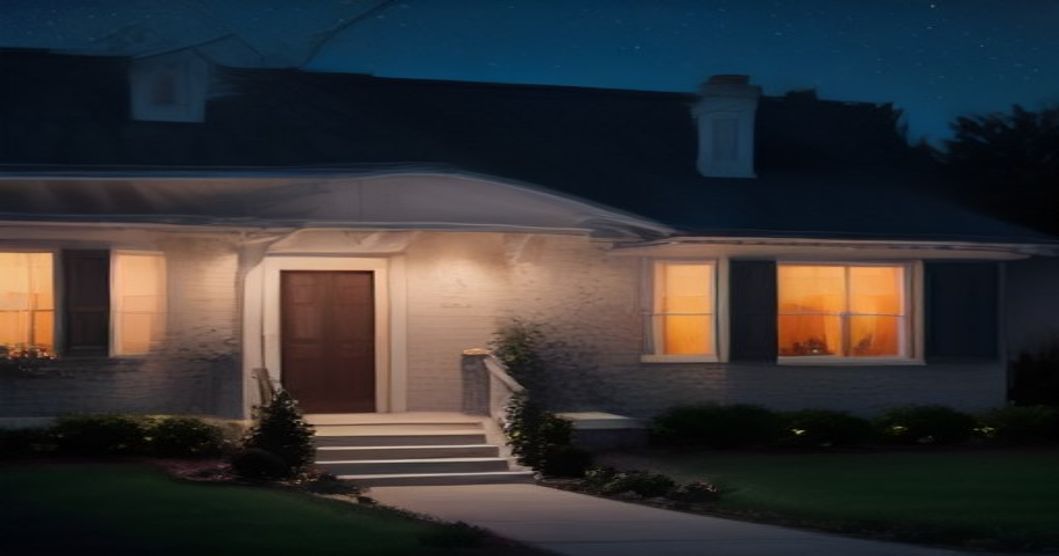
A single strand of C9 bulbs traced along a roofline can transform an ordinary Pennsylvania colonial into a landmark that neighbors slow down to photograph. That transformation doesn't happen by accident. It happens because someone made deliberate decisions about spacing, wattage, finish, and color — decisions that are surprisingly technical under the hood. Whether you're planning a residential roofline, a 300-foot commercial ridge run, or a downtown municipal display, this complete C9 bulb guide walks you through every variable that separates a mediocre installation from one people remember all winter long.
What Makes C9 Bulbs the Standard for Large-Scale Holiday Displays in Pennsylvania
C9 bulbs are the workhorse of large-scale holiday lighting because their E17 intermediate base and 2.5-inch diameter body produce enough visible light output to read clearly from 50 to 150 feet — the typical viewing distance for a Pennsylvania roofline or commercial facade. Introduced in the mid-20th century as a step up from the original C6 and C7 form factors, C9s became the default for roofline and ridge-cap work because they simply show up at scale in a way that mini lights cannot.
For Pennsylvania properties, where lot depths often place homes 40 to 80 feet from the curb and where competing streetscape elements include mature trees and large covered porches, C9s provide the visual punch needed to anchor a display. Our detailed comparison of these two product families in the mini lights vs. C9 bulbs Pennsylvania outdoor display comparison breaks down exactly when each format wins.
C9 Physical Specs at a Glance
- Base: E17 intermediate
- Bulb diameter: Approximately 1.125 inches (the widest point of the C shape)
- Overall length: Approximately 2.5 inches
- Standard cord spacing: 12 inches or 18 inches on SPT-1 or SPT-2 wire
- Typical run length: 25 feet per string, up to 10–15 strings end-to-end on a 15-amp circuit (LED) or 3–5 strings (incandescent)
Spacing Standards for Pennsylvania Rooflines, Ridge Caps, and Peak Outlines
Twelve-inch spacing is the industry standard for most residential Pennsylvania rooflines because it creates a continuous, unbroken line of light that reads as a single illuminated edge rather than a dotted pattern. Eighteen-inch spacing is the correct choice for very long commercial ridge runs, wide municipal rooflines, or any installation where budget, amperage, or structural load requires reducing the total bulb count without sacrificing the overall silhouette effect.
12-Inch Spacing: Best Applications
- Residential roofline eaves on colonials, split-levels, cape cods, and craftsman bungalows across the Philadelphia suburbs, Pittsburgh's North Side neighborhoods, and Lancaster County farmhouses
- Steep-pitch gable peaks and dormers where the angle change demands tighter spacing to prevent dark gaps on the diagonal run
- Front-facade ridge caps where the home sits within 40 feet of the street and every bulb position is visible
- Garage rooflines paired with the main home roofline — consistency in spacing unifies the display
18-Inch Spacing: Best Applications
- Commercial buildings with rooflines 100 feet or longer — shopping centers, office parks, and mixed-use retail corridors throughout Pennsylvania
- Municipal installations on town halls, gazebos, and covered bridges where amperage budgets are fixed
- Warehouse or agricultural buildings in rural central Pennsylvania where viewing distance exceeds 150 feet
- Secondary rooflines (back and side elevations) that support the primary front display without requiring the same density
Ridge caps — the horizontal peak at the very top of a pitched roof — deserve special attention. Because the ridge cap sits at the highest and most visible point of the structure, 12-inch spacing is almost always preferred regardless of overall home size. A sparse ridge cap undercuts an otherwise dense roofline. Similarly, peak outlines on front gables should use 12-inch spacing and be clipped with proper all-in-one shingle clips rated for the specific roofing material (asphalt shingle, metal standing seam, or slate common in historic Pennsylvania homes).
For a deeper look at how symmetry and spacing decisions interact with Pennsylvania home architecture, see our symmetry and balance holiday lighting design guide for Pennsylvania. And if you're starting from scratch on a roofline project, our dedicated roofline lighting 101 guide for Pennsylvania homeowners covers clip selection, run direction, and corner treatment in full detail.
LED vs. Incandescent C9 Bulbs: Wattage, Energy Costs, and Pennsylvania Winter Season Math
LED C9 bulbs consume approximately 0.5 to 1.5 watts per bulb, while traditional incandescent C9 bulbs draw 5 to 7 watts each — a difference of roughly 80% in energy consumption that compounds significantly over a 45-to-60-day Pennsylvania holiday season.
| Specification | Incandescent C9 | LED C9 |
|---|---|---|
| Watts per bulb | 5–7W | 0.5–1.5W |
| Lumens per bulb | ~40–50 lm | ~40–70 lm (varies by color) |
| Bulbs per 15A circuit | ~300 bulbs (at 6W, ~1800W) | ~2,000+ bulbs (at 1W, theoretical) |
| Heat output | High — risk factor on vinyl soffits | Low — safe on all roofline materials |
| Bulb lifespan | 1,000–2,000 hours | 25,000–50,000 hours |
| Estimated cost (200 bulbs, 8 hrs/day, 50 days, $0.15/kWh PA avg.) | ~$72–$84 | ~$6–$18 |
Pennsylvania's average residential electricity rate hovers around $0.14 to $0.16 per kilowatt-hour. For a 150-foot roofline using 200 C9 bulbs (at 12-inch spacing, accounting for corners and peaks) running 8 hours per night for 50 nights:
- Incandescent at 6W per bulb: 200 bulbs × 6W = 1,200W = 1.2 kW × 8 hrs × 50 nights = 480 kWh × $0.15 = $72 per season
- LED at 1W per bulb: 200 bulbs × 1W = 200W = 0.2 kW × 8 hrs × 50 nights = 80 kWh × $0.15 = $12 per season
That's a $60 annual savings on one residential roofline. For a commercial property with 1,000 bulbs, the savings scales to $300 or more per season — easily justifying the higher upfront cost of LED C9s within two to three seasons. Pennsylvania property managers evaluating this for office buildings and retail centers should also factor in reduced bulb replacement labor; incandescent C9s burn out at roughly 20 to 30 times the rate of LEDs.
Beyond cost, LED C9s produce far less heat, which matters on Pennsylvania homes with vinyl soffits or in situations where cords run near dry pine garlands or wreaths. Incandescent heat output can discolor white vinyl within a single season and poses a genuine fire risk near combustible décor.
Color Temperature and Bulb Finish: Transparent vs. Frosted for Pennsylvania Conditions
Color temperature and finish are the two most frequently misunderstood decisions in C9 selection — and they have the largest impact on how a display looks in the actual conditions of a Pennsylvania winter, which includes overcast days, fog along river valleys, and snow-covered ground reflecting ambient light upward.
Warm White C9 Bulbs (2700K–3000K)
Warm white is the most requested C9 color for Pennsylvania residential rooflines because it echoes traditional incandescent warmth while delivering LED efficiency. At 2700K, the amber undertone pairs naturally with the brick facades, stone veneers, and painted wood trim common on homes throughout Chester County, the Main Line suburbs, and the historic districts of Bethlehem, Easton, and York. Warm white transparent C9s create crisp point-source light that photographs dramatically at night. Frosted warm white C9s produce a softer, more diffused glow that reads better on overcast days — Pennsylvania's predominant winter sky condition — and reduces glare for neighboring properties on tighter suburban lots.
Multi-Color and Red/Green C9 Bulbs
Multi-color C9s remain the top choice for commercial Pennsylvania installations that need to signal festivity from a distance. Red, green, blue, yellow, and orange alternating patterns activate peripheral vision and draw attention on busy arterial roads and in large parking lots. Red and green combinations in particular deliver the classic Christmas palette that municipal clients in Pennsylvania towns consistently request for their downtown holiday displays. For more on how these colors play out in civic settings, see our overview of municipal holiday lighting and community Christmas magic in Pennsylvania towns.
Transparent vs. Frosted Finish: Quick Decision Guide
- Choose transparent if your primary display hours are after dark, you want maximum brilliance in photographs, and your home has architectural details (dentil molding, decorative fascia) that benefit from defined light points.
- Choose frosted if your display must look polished during daylight hours, your home sits in a foggy Pennsylvania river valley or lake-effect zone, or you want a softer, more diffused neighborhood-friendly glow.
- Mix both on commercial and municipal projects: transparent bulbs on the primary roofline for nighttime impact, frosted on secondary elements (window wraps, garland strands) for daytime texture.
Color consistency is another reason to work with a professional installer. Consumer-grade C9 bulbs vary in color rendering even within the same product SKU, meaning a 25-strand order from a big-box store may produce visibly mismatched warm whites across a roofline. Commercial-grade C9 bulb stock from professional lighting suppliers is binned for color consistency — a difference that's immediately visible when 200 bulbs are compared side by side on a 150-foot eave.
Designing Large-Scale C9 Displays Beyond the Roofline
C9 bulbs are not limited to rooflines. When scaled correctly, they create stunning outlines on arbors, pergolas, fence lines, commercial canopies, and freestanding tree silhouettes. Pennsylvania properties — particularly those with long driveways, generous front yards, or commercial landscapes — often benefit from a layered C9 strategy that combines roofline work with ground-level or midpoint accents.
Driveway and Fence Lines
Staking C9 cords along a fence line or driveway perimeter at 12-inch spacing in warm white or multi-color creates a welcoming approach that frames the property before a visitor even reaches the front door. This technique is particularly effective on Pennsylvania farmhouses and rural properties where the home sits well back from the road.
Tree and Shrub Silhouetting with C9s
Wrapping mature deciduous trees — oaks, maples, and elms common throughout Pennsylvania's suburbs — in C9 cords at 18-inch spacing on trunk and primary branches creates dramatic focal points that no string of mini lights can match at scale. Pair with professional tree lighting services to ensure proper anchoring that doesn't damage bark. Our earlier post on bush and shrub lighting for Pennsylvania front yards covers ground-level companion planting illumination in detail.
Commercial Canopies and Awnings
For Pennsylvania retail and restaurant properties, C9 strings draped or outlined along entrance canopies at 12-inch spacing in warm white transform a commercial entrance into an inviting focal point that draws foot traffic. See how this integrates with a complete retail strategy in our storefront holiday display design guide for Pennsylvania small businesses.
Safety, Load Calculations, and Why Professional Installation Matters in Pennsylvania
Every C9 installation must respect the 80% rule for circuit loading: a 15-amp circuit should carry no more than 1,440 watts of continuous load. That limits a 15-amp circuit to roughly 240 incandescent C9s at 6 watts each, or well over 1,000 LED C9s at 1 watt each. Pennsylvania homes built before 1980 frequently have 15-amp circuits on exterior outlets with no GFCI protection — a combination that creates real risk when wet December weather arrives.
Professional installers calculate total load across all strings, identify and test GFCI outlet availability, and use weatherproof connectors rated for outdoor use in temperatures as low as -20°F — temperatures that aren't unheard of in the Pocono Mountains or the Northern Tier of Pennsylvania. DIY installations that daisy-chain beyond rated capacity are the leading cause of holiday lighting failures and, in worst cases, electrical fires. Our post on why Pennsylvania homeowners trust professional holiday lighting over DIY covers the safety case in full.
Beyond electrical safety, working at roofline height on ladders or scaffolding on a Pennsylvania property in November and December introduces serious fall risk. Professional crews work with proper stabilizers, roof-rated footwear, and harness systems on steep pitches. That risk transfer alone justifies the service cost for most homeowners.
Ready to plan a C9 display for your Pennsylvania home or property? Explore our residential holiday lighting services or commercial holiday lighting services to see the full scope of what we install, manage, and remove each season.
Frequently Asked Questions
What is the best C9 bulb spacing for a Pennsylvania colonial-style roofline?
Twelve-inch spacing is the best choice for a Pennsylvania colonial roofline. Colonial homes typically feature long, horizontal eave lines with symmetrical gable ends, and 12-inch spacing creates the unbroken edge-of-light effect that makes these architectural lines pop. At 18-inch spacing, the eave line reads as dotted rather than continuous when viewed from the street, which undercuts the formal symmetry that colonial architecture demands. Reserve 18-inch spacing for secondary rooflines, very long commercial ridge runs over 150 feet, or situations where amperage budget requires reducing total bulb count.
How much money can I save switching from incandescent to LED C9 bulbs in Pennsylvania?
A typical Pennsylvania residential roofline with 200 C9 bulbs running 8 hours per night for 50 nights saves approximately $60 per season by switching from incandescent (6W per bulb) to LED (1W per bulb) at Pennsylvania's average electricity rate of $0.15 per kWh. Commercial properties with 1,000 or more bulbs can save $300 to $500 per season. LED C9 bulbs also last 25 to 30 times longer than incandescent equivalents, reducing replacement labor costs significantly over a 5-to-10-year horizon.
Should I choose transparent or frosted C9 bulbs for my Pennsylvania home?
Choose transparent C9 bulbs if your primary display window is after dark and you want maximum brilliance and photographic impact. Choose frosted C9 bulbs if your display needs to look polished during daylight hours, your home is in a foggy area (common in Pennsylvania river valleys and the Pocono foothills), or you prefer a softer glow that's less glare-intensive for neighbors on tight suburban lots. Many professional Pennsylvania installations combine both finishes — transparent on the roofline for nighttime drama, frosted on garlands and window accents for daytime texture.
How many C9 bulbs can I safely run on one outdoor circuit at my Pennsylvania home?
On a standard 15-amp outdoor circuit, the safe continuous load limit is 1,440 watts (80% of 1,800W). Incandescent C9 bulbs at 6 watts each allow approximately 240 bulbs per circuit. LED C9 bulbs at 1 watt each allow well over 1,000 bulbs per circuit. Many Pennsylvania homes built before 1980 have only one or two exterior outlets, sometimes without GFCI protection, which means a professional load calculation is essential before installation. Overloading a circuit is the leading cause of holiday lighting failures and tripped breakers during the holiday season.
Can C9 bulbs be used on commercial and municipal Pennsylvania properties, not just homes?
Yes — C9 bulbs are actually the preferred format for commercial and municipal Pennsylvania holiday displays precisely because of their large form factor and long viewing distance. Shopping centers, office parks, town halls, and historic district main streets across Pennsylvania use C9 strings at 12-to-18-inch spacing on rooflines, canopies, fence lines, and trees to create displays that read from moving vehicles and crowded sidewalks. Multi-color and warm white C9s are most common in commercial contexts, with red and green combinations favored for traditional municipal holiday themes.
What wire gauge and cord type should C9 strings use for outdoor Pennsylvania installations?
C9 strings for outdoor Pennsylvania installations should use SPT-2 wire (18-gauge, thicker insulation) rather than SPT-1 (20-gauge) when runs exceed 50 feet or when the installation will be exposed to the Pennsylvania freeze-thaw cycles common from November through January. SPT-2 cord maintains flexibility down to approximately -20°F, resists cracking from ice and UV exposure, and handles the higher amperage loads of longer incandescent runs more safely. LED C9 installations on shorter residential runs can use SPT-1 wire without issue, but professional installers typically default to SPT-2 for all outdoor work as a safety standard.
Whether you're outlining a single-family roofline in Bucks County or planning a 500-foot commercial ridge installation for a Pennsylvania shopping center, the right C9 strategy starts with a professional assessment. Contact Holiday Lights Decor Pennsylvania for a free estimate — our team will evaluate your roofline geometry, circuit capacity, and design goals to build a C9 display that performs beautifully through every Pennsylvania winter night.