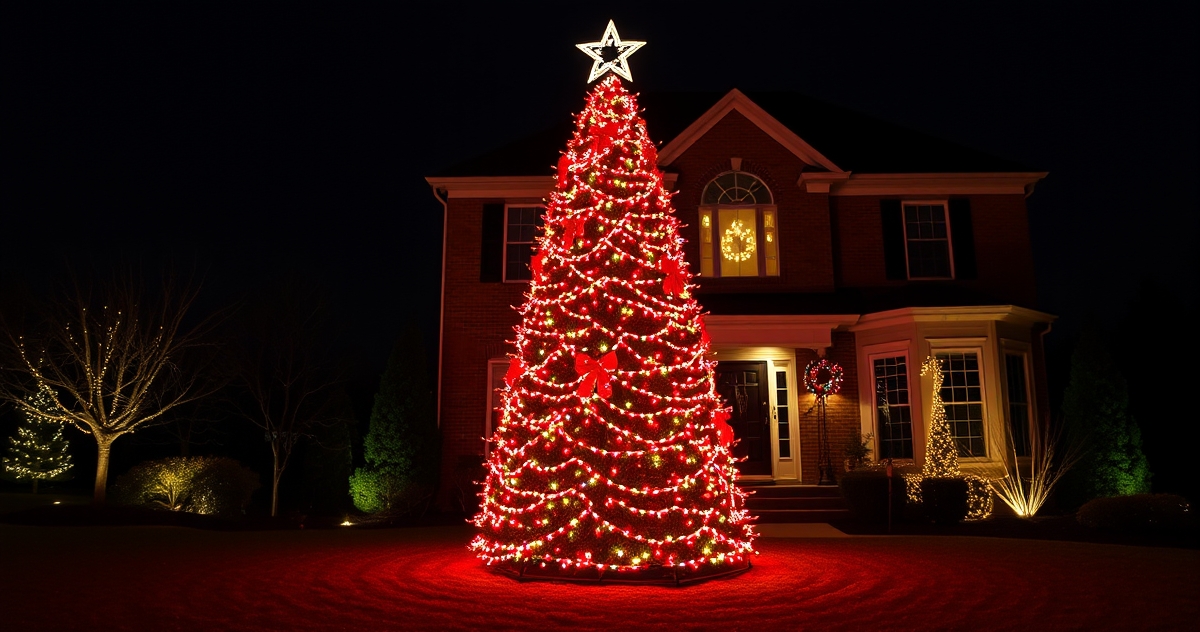
Picture your neighborhood on a crisp December evening — bare trees, frosted lawns, and then one house that stops you in your tracks. The roofline glows with perfectly spaced warm white C9 bulbs, tracing every ridge and eave in a clean, luminous outline that makes the whole home look like something out of a holiday catalog. That kind of result doesn't happen by accident. It starts with planning, and it starts well before the first cold snap hits Pennsylvania.
If you've been thinking about upgrading your home's roofline lighting — or tackling it for the first time — this guide walks you through everything from accurate measurement techniques to choosing the right clip for your specific roofline surface. We'll also explain why the homeowners who get the best results every December are the ones making their installation decisions in summer.
Understanding Your Roofline: Ridge, Eave, and Gable Runs Explained
Before you order a single C9 bulb or foot of stringer wire, you need to understand the three primary sections of a roofline and how they behave differently when it comes to holiday lighting.
- Eave runs are the horizontal edges at the bottom of each roof slope — the lines most people think of first when imagining roofline lighting. These are typically the longest, most visible runs on a home and form the foundation of your display.
- Gable runs are the diagonal edges along the triangular ends of a roof. They add dramatic dimension to a display and are particularly striking on Colonial and Cape Cod-style homes common throughout Pennsylvania.
- Ridge runs follow the peak of the roof from end to end. When illuminated, the ridge creates a crown effect that ties the entire roofline together and adds significant visual height to your display.
Each of these sections requires its own linear footage measurement. Don't estimate — walk the perimeter, use a tape measure or a digital measuring wheel, and document every run separately. Add 10% to each measurement as a buffer for corners, connector lengths, and any gentle curves in your roofline. Pennsylvania homes, especially older Victorians and Craftsman bungalows, often have unexpected architectural details that consume extra stringer length.
For a deeper look at how professional installers approach residential projects like this, visit our residential holiday lighting page to see what a full-service installation includes from measurement through takedown.
Choosing the Right C9 Bulb Spacing: 12-Inch vs. 18-Inch for PA Home Styles
Once you have your measurements, the next critical decision is bulb spacing. C9 stringer wire is manufactured with sockets at fixed intervals — most commonly 12 inches or 18 inches apart — and this choice has a bigger visual impact than most homeowners expect.
12-inch spacing delivers a denser, more traditional look. The bulbs sit closer together, creating a nearly continuous line of light that reads beautifully from the street. This spacing works especially well on smaller homes, steep gable lines, and rooflines with lots of architectural detail. It also tends to read better with cool white C9 bulbs, where the crisper light benefits from the tighter clustering.
18-inch spacing gives each bulb room to breathe and creates a more modern, intentional aesthetic. It's ideal for larger homes with long horizontal eave runs — think the sprawling ranchers and two-story colonials found throughout suburban Chester, Montgomery, and Bucks counties. Eighteen-inch spacing is also more economical, requiring fewer bulbs and drawing less power across long runs, which matters when you're outlining a home with 200+ linear feet of roofline.
In terms of color, warm white C9 bulbs (with their soft, amber-toned glow) tend to be the most universally flattering for Pennsylvania homes, complementing brick, stone, and painted wood siding alike. Cool white C9 bulbs create a striking contrast against darker exteriors and pair beautifully with silver and blue accent elements — a look explored in detail in our post on blue and white winter themes.
Not sure which direction is right for your home? Our full-service lighting team can walk you through options with a site assessment before any product is ordered.
Clip Types: Protecting Your Asphalt Shingles, Gutters, and Fascia Boards
This is where roofline lighting projects most commonly go wrong — and where the difference between a professional installation and a DIY job becomes most apparent. The wrong clip type doesn't just look bad; it can cause real damage to your home's exterior that won't become apparent until spring.
Here's a breakdown of the most common clip types and when to use each:
- All-in-one shingle clips slide under the edge of asphalt shingles and hold the stringer wire right at the roofline edge. They require no adhesive or fasteners, leave no holes, and are the standard choice for most sloped roofs in Pennsylvania. They work best when installed from the ground up, secured before the wire is laid.
- Gutter clips hook over the lip of a K-style or half-round gutter and position bulbs just above or just below the gutter line depending on your desired look. These are removable without tools and cause zero surface damage, making them ideal for aluminum gutters common on mid-century homes.
- Fascia clips attach to the flat fascia board behind the gutter when gutter-top mounting isn't possible. These typically use a small adhesive strip or a gentle-tension design. They're the right choice for homes with partially enclosed soffits or non-standard gutter profiles.
- Adhesive clips can be used on smooth painted surfaces but should be avoided on textured surfaces, vinyl, or any area where moisture intrusion is a concern — which describes most Pennsylvania homes given our freeze-thaw cycles.
The critical rule: never nail, staple, or screw directly into your shingles, fascia, or gutter to hang lights. Every penetration point in a roofline is a potential water entry point, and in Pennsylvania winters, water intrusion leads quickly to ice damming and structural damage. This is one of the primary reasons so many homeowners in the state have moved away from DIY installation — a topic covered extensively in our post on professional installation safety versus DIY holiday lighting dangers.
Weatherproofing Your C9 Installation for Pennsylvania Winters
Pennsylvania doesn't do mild winters. From the lake-effect snow zones of Erie County to the ice storms that roll through the Lehigh Valley, your roofline lighting installation needs to be built for the conditions — not just for the look.
When selecting C9 bulbs, always verify that they are rated for outdoor use and carry a UL listing for wet locations. LED C9 bulbs have a significant advantage over incandescent here: they generate far less heat, which means they're less likely to cause issues where stringer wire contacts snow or ice accumulation. They also consume dramatically less power, which matters when you're running long parallel circuits across a large roofline.
All connection points — where stringer sections join, where extension cords meet power sources, and where any inline fuses are located — should be kept off the ground and protected from pooling water. Weatherproof cord covers and outdoor-rated junction boxes aren't optional in Pennsylvania; they're essential. We cover how to protect your installation across seasons in detail in our article on Pennsylvania weather and protecting your holiday light investment.
Additionally, every circuit should be on a GFCI-protected outlet. If your home doesn't have GFCI outlets on the exterior, that's an upgrade worth making before your first holiday season — for both safety and insurance purposes.
Why Summer Planning Locks In the Best Results for December
This might be the most important section in this entire guide, and the one most homeowners skip until it's too late.
Professional holiday lighting installation in Pennsylvania operates on a compressed seasonal calendar. The installation window — roughly late October through early December — is when every installer, every crew, and every supplier is at maximum capacity. Homeowners who contact professional lighting companies in November frequently find that prime scheduling slots are already committed to clients who planned ahead.
But beyond scheduling, summer planning offers a set of practical advantages that simply aren't available in the fall:
- Accurate measurements without pressure. In summer, there's no urgency, no early frost, and no competing priorities. You can take your time measuring every run, photographing architectural details, and mapping your electrical panel capacity without a deadline looming.
- Product availability. C9 stringer wire, specific bulb styles, and specialty clip hardware can sell out by mid-October. Summer orders guarantee you get exactly the products you want — including the warm white or cool white C9 bulb style that fits your home's look.
- Infrastructure assessment. Summer is the ideal time to identify any roofline repairs, gutter issues, or fascia damage that should be addressed before clips and stringers go up. Attaching holiday lighting to a damaged roofline is a recipe for a much more expensive spring repair bill.
- Priority scheduling. Most professional lighting companies offer early-booking incentives and guaranteed installation dates to clients who confirm in the summer and spring months.
For more on why early planning pays off, take a look at our post on why April is the perfect time to start planning your holiday lighting — and consider that what applies in spring applies equally in summer.
Frequently Asked Questions
How many C9 bulbs do I need for my roofline?
Start by calculating your total linear footage across all runs — eaves, gables, and ridge. If you're using 12-inch spacing, you'll need one bulb per foot plus a small buffer. At 18-inch spacing, divide your total footage by 1.5 to get your bulb count. Always add 10–15% for connectors, corners, and any unexpected additions. A typical two-story colonial in Pennsylvania might require 150–250 C9 bulbs for a full roofline outline.
Can I mix warm white and cool white C9 bulbs on the same roofline?
Technically yes, but the result is rarely flattering. Warm white and cool white have noticeably different color temperatures — approximately 2700K versus 5000K — and mixing them on the same continuous run creates an inconsistent, patchy appearance. If you want to use both colors, separate them onto distinct architectural sections (e.g., warm white on the eaves, cool white on the gables) with clear visual breaks between them.
Will C9 clips damage my asphalt shingles?
When installed correctly, quality shingle clips cause no damage to asphalt shingles. The clips are designed to slide under the shingle edge without penetrating, bonding, or stressing the material. The key is using the right clip for your shingle profile and not forcing clips onto older brittle shingles in cold weather. If your shingles are aging or already showing signs of curling, a professional assessment before installation is strongly recommended.
How long does a professional roofline C9 installation typically take?
For an average-sized Pennsylvania home (1,500–2,500 sq ft), a professional two-person crew can typically complete a full roofline installation in 3–6 hours. Larger homes, complex rooflines with multiple gable and ridge runs, or properties requiring significant ladder work on steep pitches may take a full day. Takedown at the end of the season is generally faster — typically 1–3 hours for the same property.
Is it worth hiring a professional for C9 roofline lighting, or can I do it myself?
For single-story homes with accessible eave lines and minimal pitch, experienced DIYers can achieve good results with careful planning. But for two-story homes, steep pitches, complex rooflines, or any installation requiring extended ladder work above 15 feet, professional installation is the safer and often more cost-effective choice when you factor in equipment, time, and the risk of injury or property damage. Pennsylvania's unpredictable fall weather also makes working at height significantly more dangerous than it appears on a calm day.
Your roofline is the most visible architectural feature of your home, and the right lighting can transform it into something genuinely breathtaking every December evening. Whether you're planning a classic warm white C9 outline or a bold cool white statement display, the investment in proper planning — the right measurements, the right clips, the right spacing, and the right timing — pays off every year the lights go up. Holiday Lights Decor Pennsylvania has been helping homeowners across the state get this right since 2006. If you're ready to stop guessing and start planning, request a free quote or contact our team today — and let us help you design a roofline display that your whole neighborhood will remember.